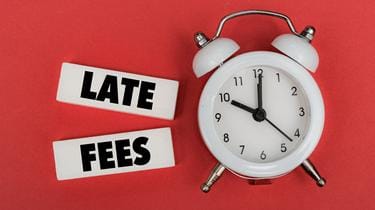
As the deadline for Self Assessment passes, new data from HMRC shows that taxpayers paid a staggering £325 million in fines and interest last year after failing to meet the 31 January deadline.
Recent analysis of HMRC’s publicly available statistics found that around 600,000 individuals were hit with penalties for filing or paying late, which serves as a clear warning to those who still have returns or payments outstanding.
Fines for late tax returns and payments
HMRC’s systems automatically issue a £100 penalty for missing the filing deadline, even if no tax is owed, with further fines issued if payment or filing of a tax return isn’t completed within certain time frames.
Fines for late filing are as follows:
| Date of filing | Penalty |
| 1 day late | £100 fixed penalty (applies even if no tax is owed) |
| 3 months late | £10 per day penalty, up to 90 days (maximum £900) |
| 6 months late | Further penalty of the higher of £300 or five per cent of the tax due |
| 12 months late | Another penalty of the higher of £300 or five per cent of the tax due |
| 12 months late (serious cases) | Up to 100 per cent of the tax due in very serious cases (e.g. deliberate withholding of information) |
Fines for late payments are as follows:
| How late the payment is | Penalty |
| 1 day late | Interest charged on the overdue tax at the HMRC interest rate (currently 7.75 per cent) |
| 30 days late | A penalty of five per cent of the unpaid tax |
| 6 months late | Additional penalty of five per cent of the unpaid tax |
| 12 months late | Another five per cent penalty of the unpaid tax |
HMRC estimates that £8.7 billion of Self Assessment tax went unpaid in the 2023/24 cycle. This represents 12.5 per cent of the £69.6 billion it expected to collect for the year.
Across all taxes, around £44 billion is now overdue, with the vast majority already in line for formal debt collection.
Be prepared for Self Assessment
For many taxpayers, the real issue is a lack of preparation rather than an unwillingness to pay.
Underestimating a tax bill, poor record keeping or leaving everything until the last minute can lead to panic and costly mistakes.
Once penalties and interest start to accumulate, the situation can quickly spiral out of control.
Setting aside funds throughout the year and seeking advice well before the deadline can make a significant difference.
If you are unsure about your Self- Assessment obligations or are worried about an existing liability, speak to your Seymour Taylor contact or enquiries@stca.co.uk 01494 552100